

Car Oil Leak: Causes, Repair & Prevention Tips
A car oil leak is more than an annoying stain on the driveway. It can be an early warning that a gasket, seal, filter, plug, or engine component is no longer keeping oil where it belongs. The good news is that many oil leak causes can be spotted early with a few simple checks, and quick action can help protect your engine, reduce repair costs, and keep your vehicle safer to drive.
Why is my vehicle leaking oil when parked?
A vehicle leaking oil while parked usually has oil seeping from a worn seal, loose part, damaged gasket, or lower engine component after the engine has been running. When you shut the car off, gravity pulls oil downward, and pressure changes inside the engine can make weak points easier to notice. That is why a leak may show up as a fresh puddle after the car sits overnight, even if you did not notice drips while driving.
Oil leaks can start small, then slowly get worse as rubber seals harden, gaskets flatten, or bolts loosen from heat and vibration. A few drops may not look dramatic, but the engine depends on a stable oil level to lubricate moving parts and carry away heat. If the leak grows and the oil level falls too low, friction rises, engine wear accelerates, and overheating becomes more likely.
Common oil leak causes under the hood
An engine oil leak can come from several places, and the exact source is not always directly above the puddle. Oil can run along metal surfaces, drip onto shields, or blow backward while driving before it finally lands on the ground. Still, some leak points are more common than others.
Worn valve cover gasket
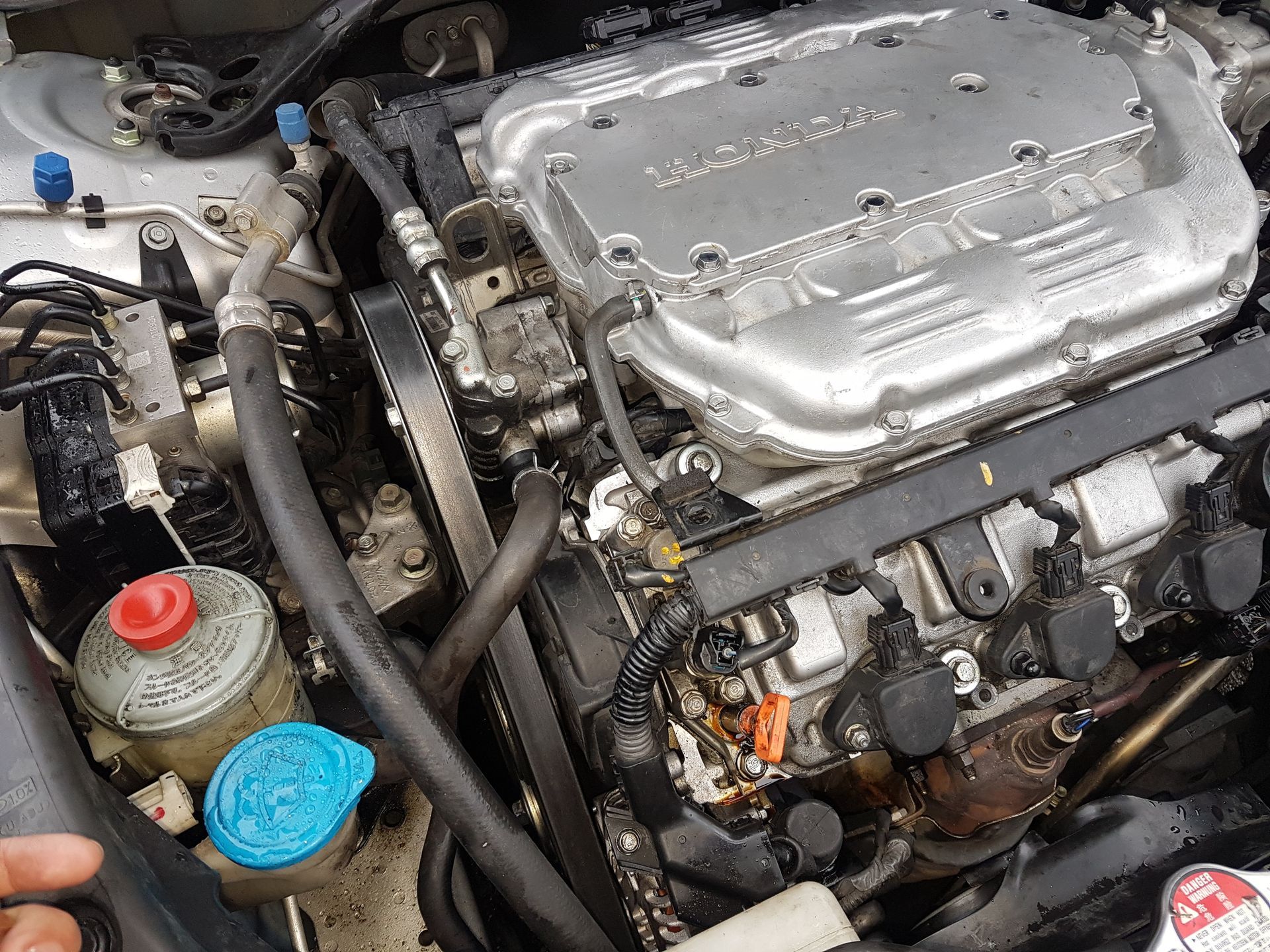
The valve cover sits near the top of the engine, and its gasket seals the area where oil lubricates valve train components. Over time, heat can make the gasket brittle or compressed. When that happens, oil may seep down the side of the engine, sometimes creating a burning oil smell if it reaches hot exhaust parts.
This type of leak may look minor at first because it often appears as wet residue rather than a large puddle. However, it should not be ignored. A leaking valve cover gasket can make the engine bay messy, damage nearby rubber parts, and make future diagnosis harder because old oil hides new leaks.
Oil pan gasket or damaged oil pan
The oil pan is located underneath the engine, which makes it vulnerable to road debris, curbs, rough pavement, and worn gaskets. If the pan gasket fails, oil may drip from the lower edge of the engine. If the pan itself is cracked, dented, or punctured, the leak may be faster and more serious.
This is one reason drivers in busy areas like Brandon FL should pay attention after hitting a pothole, parking stop, or object in the road. Even if the vehicle seems to drive normally, a damaged oil pan can let oil escape quickly. A sudden large puddle under the front or middle of the car deserves immediate attention.
Loose oil filter or drain plug
Sometimes the cause is connected to a recent oil change. An oil filter that is loose, cross-threaded, damaged, or fitted with an old stuck gasket can leak after the engine runs. A drain plug can also leak if it is not tightened correctly, if the threads are damaged, or if the washer is worn.
This kind of car oil leak may appear soon after service, so timing matters. If you notice spots shortly after an oil and filter change, check the oil level and contact the shop or service provider promptly. Do not assume it will “settle in,” because a loose filter or plug can worsen quickly.
Oil filler cap problems
The oil filler cap is a small part, but it matters. If it is loose, cracked, missing, or not seated properly, oil can splash out while the engine runs. This may leave oily residue around the top of the engine rather than a neat puddle on the ground.
A cap issue is one of the simpler problems to spot visually. With the engine off and cool, look for oil around the cap area and make sure the cap twists on securely. If the cap is damaged, replacement is usually straightforward, but the surrounding mess should still be cleaned so you can confirm the leak is fixed.
Crankshaft, camshaft, or other engine seals
Rotating engine parts rely on seals to keep oil inside while shafts move. When these seals wear out, oil may leak from the front or rear of the engine. These leaks can be harder to diagnose because they may be hidden behind pulleys, covers, or the transmission area.
Seal-related oil leak repair can be more involved than replacing a visible gasket or cap. The part itself may not look expensive, but labor can increase if components must be removed to reach it. A professional inspection is often the most reliable way to confirm these leaks.
How can you tell if the puddle is engine oil?
You can usually identify engine oil by its feel, color, smell, and location, but you should avoid touching unknown fluids with bare skin. Engine oil is slick and greasy, often amber when fresh and dark brown or black when used. It commonly appears under the engine area, while other fluids may be brighter, thinner, sweeter-smelling, or located closer to the wheels, radiator, or transmission.
A careful home check can give you useful clues before you call a mechanic. It will not replace a full inspection, but it can help you describe the problem clearly and decide how urgent it feels.
Try these basic checks:
- Look at the color. Fresh oil may be honey-colored or amber. Older oil is usually dark brown or black. If the fluid is red, green, orange, or clear, you may be dealing with something else.
- Check the texture. Oil feels slippery and thicker than water. Use a paper towel or cardboard, not your hand, to inspect it.
- Note the location. Oil under the front center of the vehicle often points toward the engine, oil pan, filter, or drain plug area.
- Use the dipstick. With the vehicle parked on level ground and the engine off, check whether the oil level is dropping.
- Pay attention to smell. A burning oil odor can mean oil is landing on hot engine or exhaust components.
- Watch the dashboard. An oil pressure or oil warning light is not something to monitor casually. Pull over safely and shut the engine off.
If the leak is difficult to trace, a shop may use cleaning, inspection, and UV dye tracing to find the source. This is especially helpful when old oil residue is spread across multiple areas.
Warning signs that make an oil leak urgent
Not every leak is an emergency, but some symptoms call for immediate caution. Oil protects internal engine parts from metal-on-metal contact. When the level falls too low or oil reaches hot surfaces, the risk shifts from inconvenience to potential engine damage or safety trouble.
Treat the situation as urgent if you notice:
- A large puddle forming quickly under the vehicle
- Oil dripping continuously after the engine is turned off
- Smoke from the engine bay
- A strong burning oil smell
- The oil warning light or low oil pressure warning
- Knocking, ticking, or rough engine sounds
- Overheating or a rising temperature gauge
- Oil splatter near belts, exhaust parts, or electrical components
If any of these signs appear, avoid driving unless you are moving the vehicle to a safe nearby location. Continuing to drive with low oil pressure can cause severe engine wear in a short time. When in doubt, shut the vehicle off and arrange for roadside help or towing.
Safe steps to take before scheduling oil leak repair
The right first move depends on the severity of the leak. A few drops on cardboard after several days is different from a stream of oil after every drive. Still, there are practical steps that help you stay safe and avoid making the problem worse.
Start by parking on a level surface and placing clean cardboard under the engine area overnight. This helps you see where the oil lands and how much appears. Check the dipstick before driving, and add the correct oil only if the level is low and you know what type your vehicle requires. Adding oil is not a repair, but it can help prevent damage while you arrange service.
Next, look for simple visible issues with the engine off and cool. Make sure the oil filler cap is secure. If you recently had an oil change, inspect the general area around the filter and drain plug without crawling under an unsafe vehicle. Never rely on a jack alone, and do not touch hot engine parts.
Before your appointment, write down what you noticed:
- When the leak started
- Whether it appeared after an oil change or road impact
- The size and color of the spot
- Any smell, smoke, noise, or warning lights
- How quickly the oil level drops
- Whether the leak happens only when parked or also after driving
This information saves time and helps the technician narrow down possible oil leak causes.
Cost and repair expectations without the guesswork
Oil leak repair can be simple or complex depending on the source, access, and whether related parts are damaged. Replacing a loose cap, washer, or filter issue is usually far less involved than repairing a rear main seal or removing parts to reach a hidden gasket. Because labor access varies by engine design, two leaks that sound similar can have very different repair needs.
A trustworthy inspection should identify the leak source before recommending parts. Be cautious of replacing multiple components without a clear diagnosis, especially if the engine is already coated with old oil. In some cases, the mechanic may clean the area first, run the engine, and recheck for fresh seepage.
Ask these questions before approving work:
- What part is leaking, and how was it confirmed?
- Is the leak active or old residue from a previous issue?
- Is it safe to drive until the repair date?
- Are any nearby belts, hoses, or mounts oil-soaked?
- Does the repair include a fresh oil level check afterward?
- Should any gasket, seal, washer, or filter be replaced at the same time?
Clear answers help you avoid unnecessary repairs while still taking the leak seriously.
Car maintenance tips to prevent oil leaks
You cannot prevent every leak, especially as a vehicle ages, but consistent maintenance reduces risk. Oil breaks down over time, gaskets age, and fasteners experience vibration. Small habits make it easier to catch problems before they become expensive.
Use these car maintenance tips to prevent oil leaks and protect the engine:
- Change oil and filters on schedule. Old oil and neglected filters can contribute to sludge, pressure issues, and seal stress.
- Use quality parts and the correct oil. The wrong filter, poor washer, or incorrect oil type can create avoidable problems.
- Check oil level regularly. A quick dipstick check can reveal a slow leak before a warning light appears.
- Look under the car after service. Fresh spots after an oil change should be addressed quickly.
- Avoid road hazards when possible. Debris, curbs, and deep potholes can damage the oil pan or underbody components.
- Keep the engine bay reasonably clean. A clean surface makes new leaks easier to spot.
- Schedule inspections before long trips. This is especially useful before highway travel, hot-weather driving, or heavy traffic around Brandon FL.
Preventive maintenance is not about worrying over every drop. It is about building a habit of noticing changes early, while repairs are often simpler and the engine is still protected.
The takeaway for drivers
A car oil leak should never be ignored, but it also does not have to cause panic. Start by confirming whether the fluid is engine oil, checking the oil level, and looking for urgent warning signs like smoke, strong odors, large puddles, or dashboard alerts. If the leak is small, you may have time to schedule an inspection; if it is heavy or paired with warning lights, stop driving and get help.
The smartest approach is early diagnosis. Whether the issue is a worn gasket, loose filter, damaged oil pan, failing seal, or simple cap problem, finding the source quickly can protect your engine and help you make a confident repair decision.
Share this blog on social media!
Latest News and Updates